News
Your engagement is crucial, and together we can protect this irreplaceable landscape for generations to come.
Check out our Media Page for current news in the media
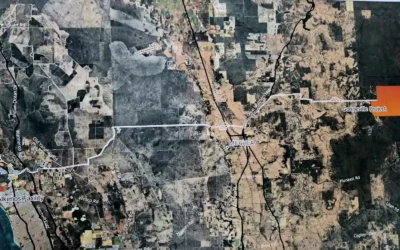
Gonneville infrastructure corridor raising concerns
Chalice Mining’s Gonneville project is currently undergoing an environmental assessment through a Public Environmental Review (PER), overseen by the EPA. While we wait, developments are happening behind the scenes. Recently, several Chittering residents received notices that the water pipeline and power infrastructure could traverse right through their private properties as part of the project.
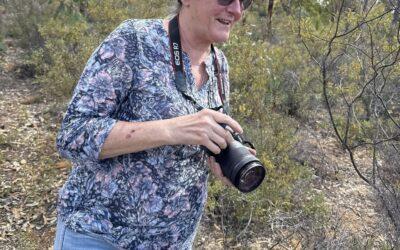
Survey updates
A cyclone threat and forecast rain forced the cancellation of our March survey, however, members were able to conduct plant and bird surveys in early April instead. We were also lucky to garner some insights into bat species present in the Forest.
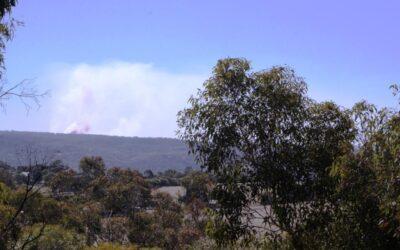
2026 prescribed burns update
Portions of the PHS195 and PHS260 prescribed burns commenced last month and have hopefully concluded for the year. We are yet to get the exact area and total hectares that were burned; however, at this stage, it looks to be a smaller area than was thought.
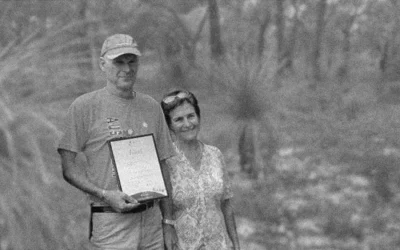
Farewell to two long-term environmental defenders
As they begin the next chapter of their lives in New South Wales, we would like to recognise Greg and Vicki Warburton’s legacy, which is defined by three decades of dedicated advocacy and on-the-ground work to conserve our wonderful local environment.
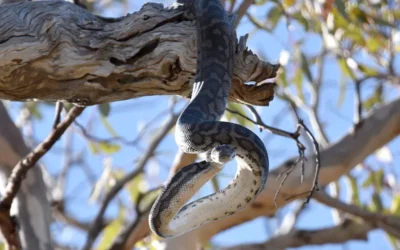
Microhabitat moments: Hidden sanctuaries
In an ecosystem where competition for shelter is fierce, tree and log hollows are a fundamental requirement for the survival of several threatened and iconic Western Australian species.
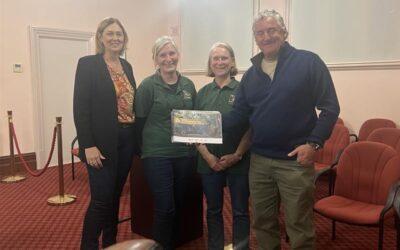
Presentation to the Toodyay Shire
At the Shire meeting on the 7th May, JCAFA presented a formal proposal to the Shire of Toodyay to upgrade Julimar State Forest to National Park status.
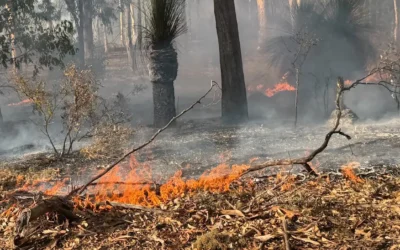
Does the bush really “need” fire? A closer look
It’s a familiar phrase across Australia: “our bush needs fire to survive.” But not all scientists agree. With controlled burns carried out across large parts of Julimar State Forest over the past week, it is a timely moment to take a closer look at that assumption.
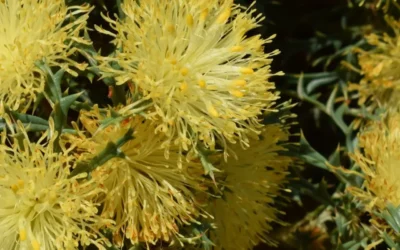
Flora in focus: Many-headed Dryandra
The Banksia polycephala, commonly known as the Many-headed Dryandra, is a striking, bushy shrub endemic to the sandplains and woodlands of Western Australia. Found in Julimar State Forest, it is primarily found in the Northern Sandplains region of Western Australia, specifically in the area between New Norcia and Bindoon.
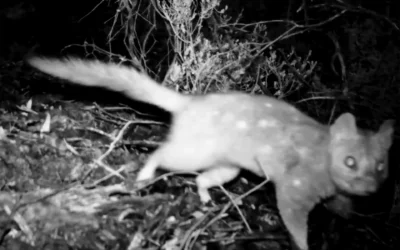
Fauna in focus: The rise of the Chuditch
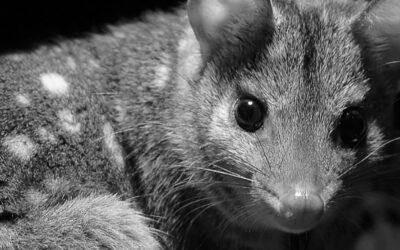
The Chuditch (Dasyurus geoffroii), or Western Quoll, is Western Australia’s largest carnivorous marsupial. Once inhabiting 70% of the Australian mainland, it is now largely restricted to the state’s southwest. Its presence in the Julimar State Forest represents a significant conservation success story.
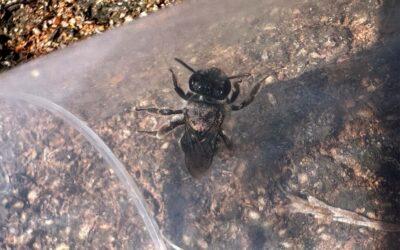
Why our native bee surveys matter
We postponed the Native Bee survey in Julimar Forest, September last year, led by ecologist, Dr Kit Prendergast. We were relieved when Dr Kit said she would come back in October to continue the survey.
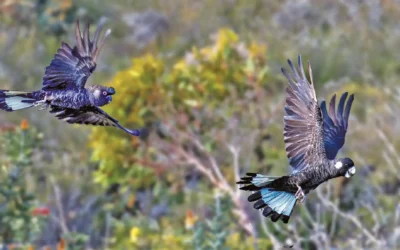
Fire destroys nest sites
Alongside the Salmon Gum woodlands of Cocanarup, Julimar State Forest and the Bindoon Training Area are Western Australia’s primary Carnaby’s Black-cockatoo breeding grounds. On 22 January, a lightning-sparked bushfire devastated 172,000 hectares in Fitzgerald River National Park, destroying the critical Cocanarup habitat and threatening the species’ future.

Bring on 2026!
We recently held our annual planning meeting and are more determined than ever to see Julimar State Forest managed as a National Park. Here is some of what’s on the horizon for 2026.
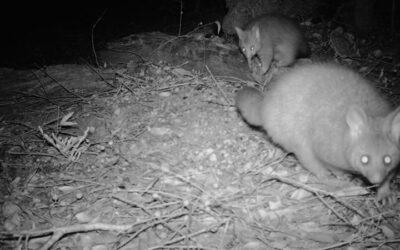
Caught on camera: Our 2025 camera trap project is rolling!
Motion-sensing cameras are essential tools allowing allow us to monitor species activity across remote areas, track population movements, and—most importantly—confirm the presence of rare animals without disturbing their natural habitats. The resulting data is crucial for future management decisions and securing the area’s rich biodiversity.
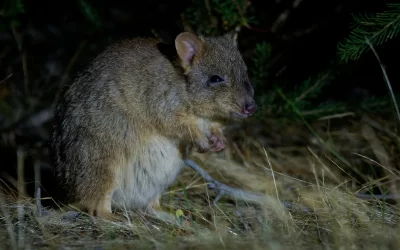
Fauna in focus: The Woylie – Western Australia’s ecosystem engineer
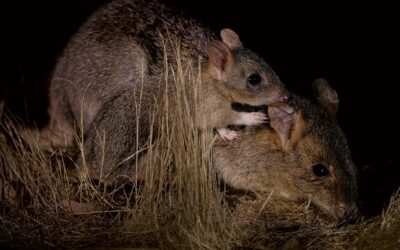
The Woylie, or Brush-tailed Bettong (Bettongia penicillata), is a small, nocturnal marsupial native to Western Australia, existing in fragmented populations, including a crucial wild colony within the Julimar State Forest region. Classified as critically endangered, the Woylie’s survival is an indicator of a healthy, functioning ecosystem.
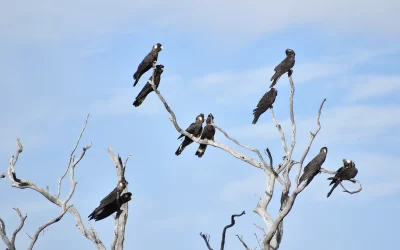
Black Cockatoo nesting success in prescribed burn area
Recently, we conducted a vital Black Cockatoo hollow survey with the the expert assistance of Adam Peck, previous Black-Cockatoo Project Coordinator at Birdlife Australia, focusing on conservation efforts, especially in light of the upcoming prescribed burns in Autumn.
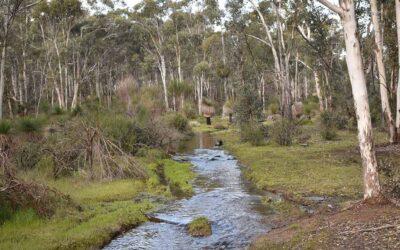
Microhabitat moments: Julimar’s water – a lifeline for the Swan-Avon
The watercourses within the Julimar State Forest and their immediate surrounds are vital micro-habitat environments, fostering an increased diversity of fungi, flora, and fauna.
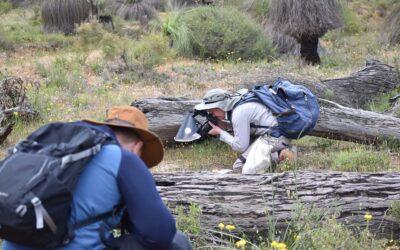
Great Southern BioBlitz bee & flora surveys
A massive thank you to our dedicated volunteers who attended the Native Bee Great Southern BioBlitz survey in Julimar State Forest, led by Dr. Kit Prendergast, the ‘Bee Babette.’ It wasn’t the only survey happening on the weekend, however.
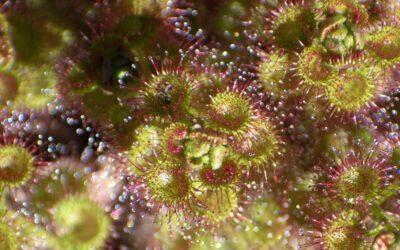
Flora in focus: Julimar’s sticky secret – the sundew
When enjoying a bush walk in the Julimar Forest this spring with Armadale Wildflower group members, we were fortunate enough to have a WA Drosera enthusiast/expert with us. Thilo Krueger identified a number of Drosera, with a final count for the day reaching 16 different species!
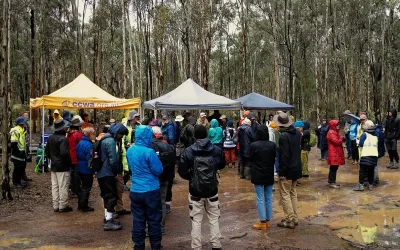
Julimar State Forest BioBlitz reveals rich biodiversity
Over 90 citizen scientists joined experts for a weekend of discovery in Julimar State Forest, recording over 360 species, including the Smooth Cage fungi, Velvet Worms, delicate Blood Orchids, and critically endangered Woylie.
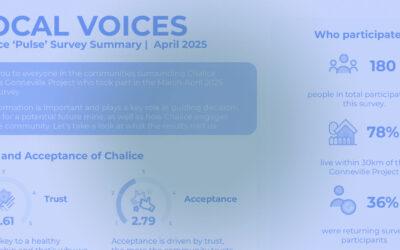
Julimar’s biodiversity at risk: Mining survey reveals deepening community concern
As we eagerly await the WA Environmental Protection Authority (EPA) review document on the Gonneville project, Chalice Mining’s community survey results (conducted earlier this year) confirm a troubling trend: while the company’s exploration continues, local trust remains low, and public environmental concerns are intensifying.
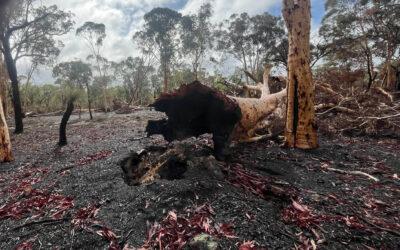
DBCA Prescribed Burns PHS260 and PHS195
We’ve found critical inaccuracies and significant concerns in the proposed prescribed burn plans for Julimar State Forest. The two planned burns, PHS260 and PHS195, cover a massive 7,528 hectares and must not proceed until DBCA addresses these issues.
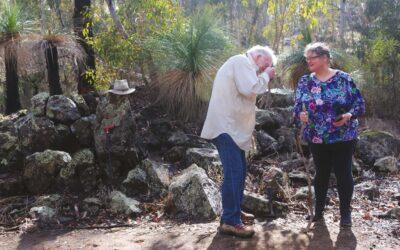
Julimar State Forest Bioblitz: Join us for a weekend of biological surveying
Join us for a weekend of biological surveying in September’s Bioblitz in Julimar State Forest.
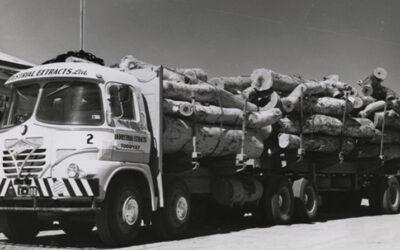
The history of the Toodyay’s Extracts timber industry
By the mid-20th century, the Julimar area, already impacted by decades of unregulated logging since the 1860s became the site of a significant industrial operation: tannin extraction. This production heavily relied on Wandoo logs from Julimar to produce up to 10 tonnes of “Myrtan” tannin daily, leading to further extensive logging.
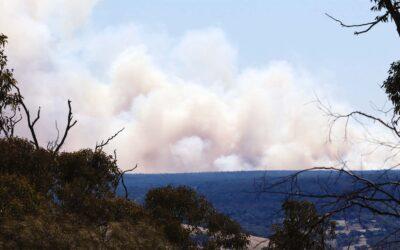
Does prescribed burning need a rethink?
The current policy of frequent prescribed burning in WA is based on refuted 2009 science, according to research from Dr. Philip Zylstra. This practice keeps the forest in a permanent state of regrowth, increasing bushfire risk and intensity. Frequent burns devastate local wildlife, pose serious human health risks from smoke haze, and that better outcomes could be achieved by adopting “good science” like Indigenous cool burning and prioritising early fire detection.
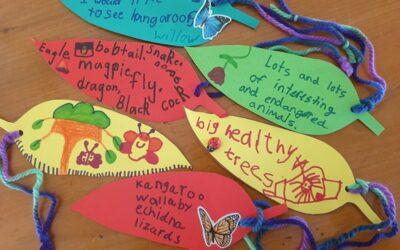
A child’s perspective
In the last two years we have had the wonderful opportunity to talk with our younger generations and hear what they perceive is happening in our natural environment.
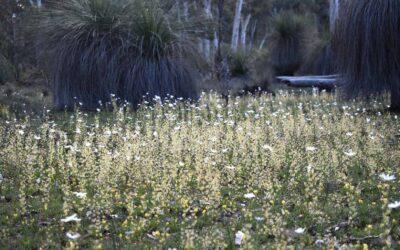
Julimar Petition rejected: WAs Environment Minister caves in to mining interests
On August 26th we received a response from the Standing Committee on Environment and Public Affairs to our petition in support of Julimar State Forest becoming a National Park. Unfortunately, Minister Whitby has stated that mining tenements in the forest will take precedence over conservation.
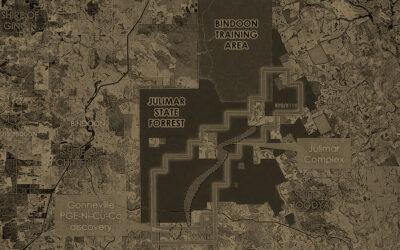
Asbestos, air quality, water pollution: Gonneville to be subject to a Public Environmental Review.
In March, the Environmental Protection Authority (EPA) put the Chalice Gonneville proposal out for public comment on what level of environmental scrutiny should be given to the proposal. In response, over 740 public submissions were made with over 710 of those requesting a Public Environmental Review, the highest level of scrutiny possible. Thanks to these submissions, the EPA published its decision to assess the Gonneville Project at the Public Environmental Review level on April 22.
Will Chalice Mine Leave An Unwanted Legacy?
The potential presence of mineral fibres, including asbestos, the potential for acid mine drainage in the long term, together with a climate change-induced diminishing regional rainfall raises major issues for environmental management and ecosystem management specifically, in and around the Julimar State Forest.
Chuditch program in danger if proposed mine goes ahead
A successful breeding program for the endangered Chuditch exists in the Julimar State Forest. Bear that in mind as Chalice Mining had made an application to the Environmental Protection Agency to progress with the Gonneville mine project.