Written by Melissa Adams, JCAFA
The watercourses within the Julimar State Forest and their immediate surrounds are vital micro-habitat environments, fostering an increased diversity of fungi, flora, and fauna.
Crucially, the brooks flowing through the Forest originate almost entirely in areas of native vegetation. This means the water is exceptionally clean, free from pesticides and artificial fertilisers – a factor that contributes significantly to the health of arthropods, amphibians, and the local soil biome.
The intact Forest also actively protects the Julimar Brook catchment from salinity, a known risk of clearing in the area.
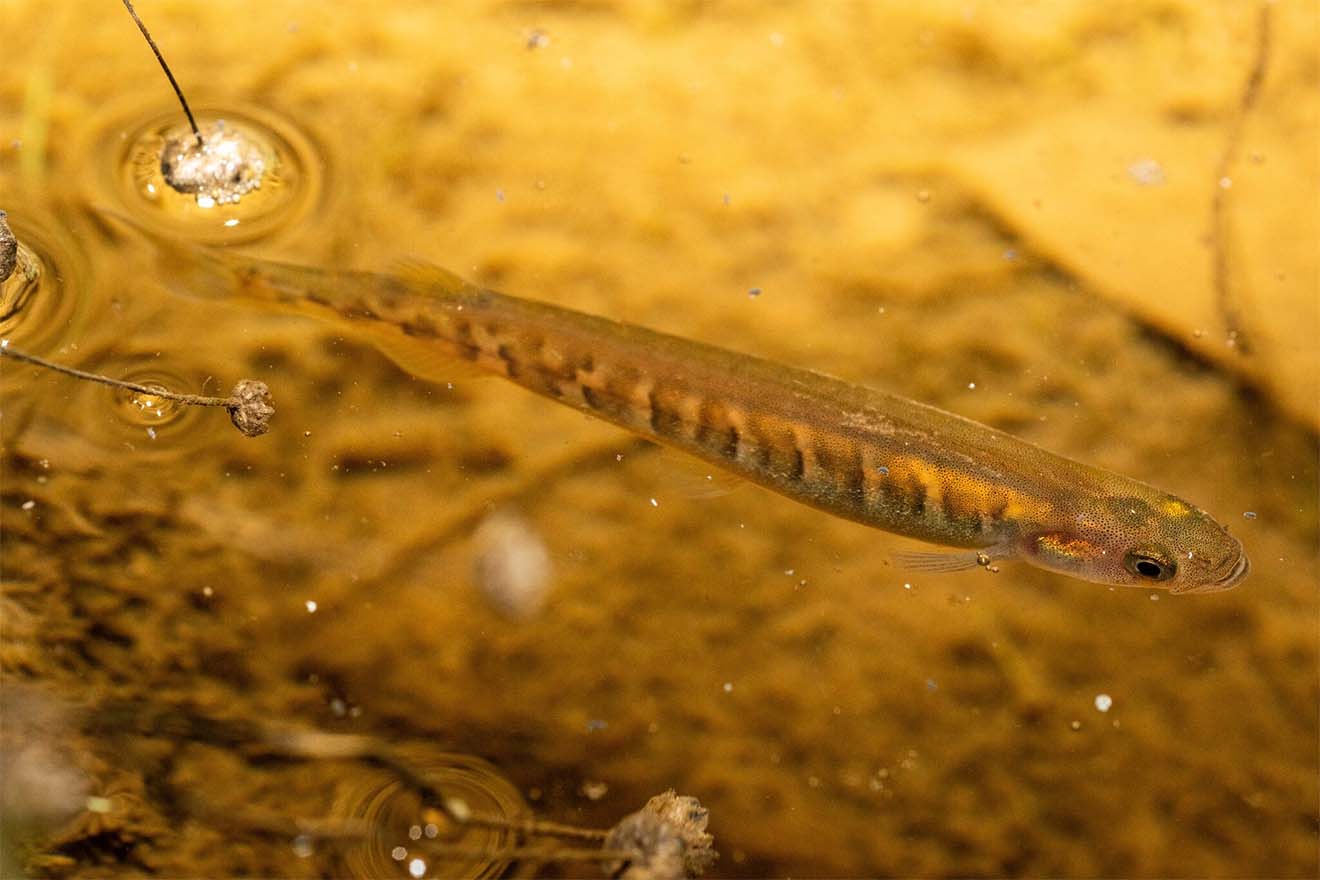
Western Galaxias (Galaxias occidentalis). Photo by Angus Dempster.
Djoorla-Maart Sacred Waters
By Noongar Kaartdijin Aboriginal Corporation of Dudjabup (Toodyay)
Kep-wari (springs, pools) and Bilya (rivers) were central to Noongar daily life – providing water, food, and medicine. These waters are part of a wider forest ecosystem, supporting life from the canopy to the understory, nourishing plants, animals, and people alike.
Families cared for these places under cultural lore, guided by protocols that ensured sustainability and respect. They remain powerful sites of healing, ceremony, and connection to country, locations where family camps were established, and are integral to the journey of the Waagyl (spirit snake).
The living waters of Djoorla-Maart forest must not be further impacted by agriculture, mining, development, or the growing pressures of climate change. What we do now will shape the health of country for future generations.
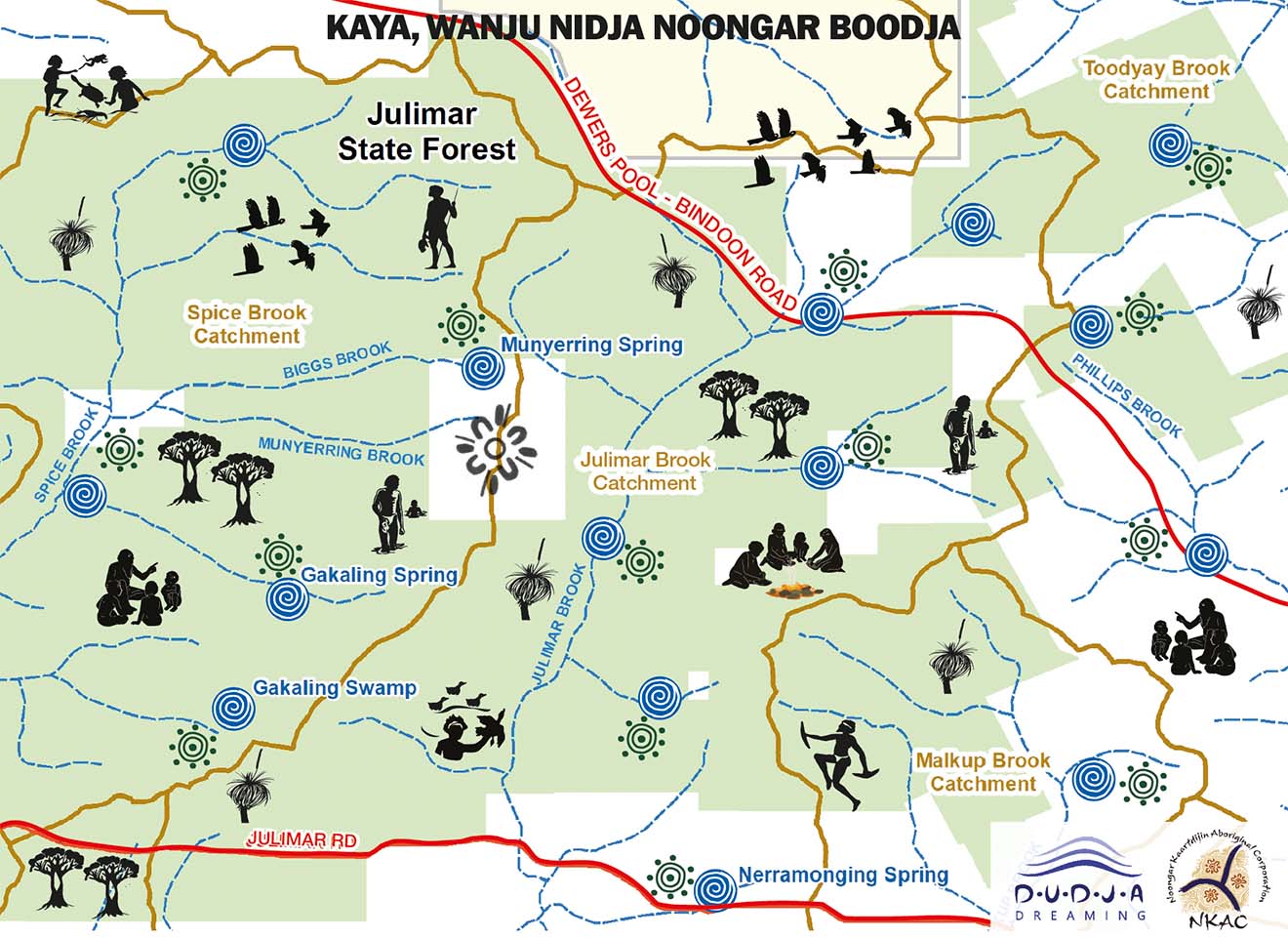
The Julimar State Forest is a key component of the massive Swan-Avon River system. The Forest’s various brooks, including the Spice, Biggs, Munyerring, Julimar, and Malkup Brooks, all drain into the Brockman and Avon Rivers. The Avon then flows into Perth’s iconic Swan River (Derbarl Yerrigan).
This deep connection means that the future of Julimar State Forest is directly linked to the health of communities downstream, potentially affecting water quality all the way to the Perth CBD and the coastal waterways of the Indian Ocean around its outlet at Fremantle.
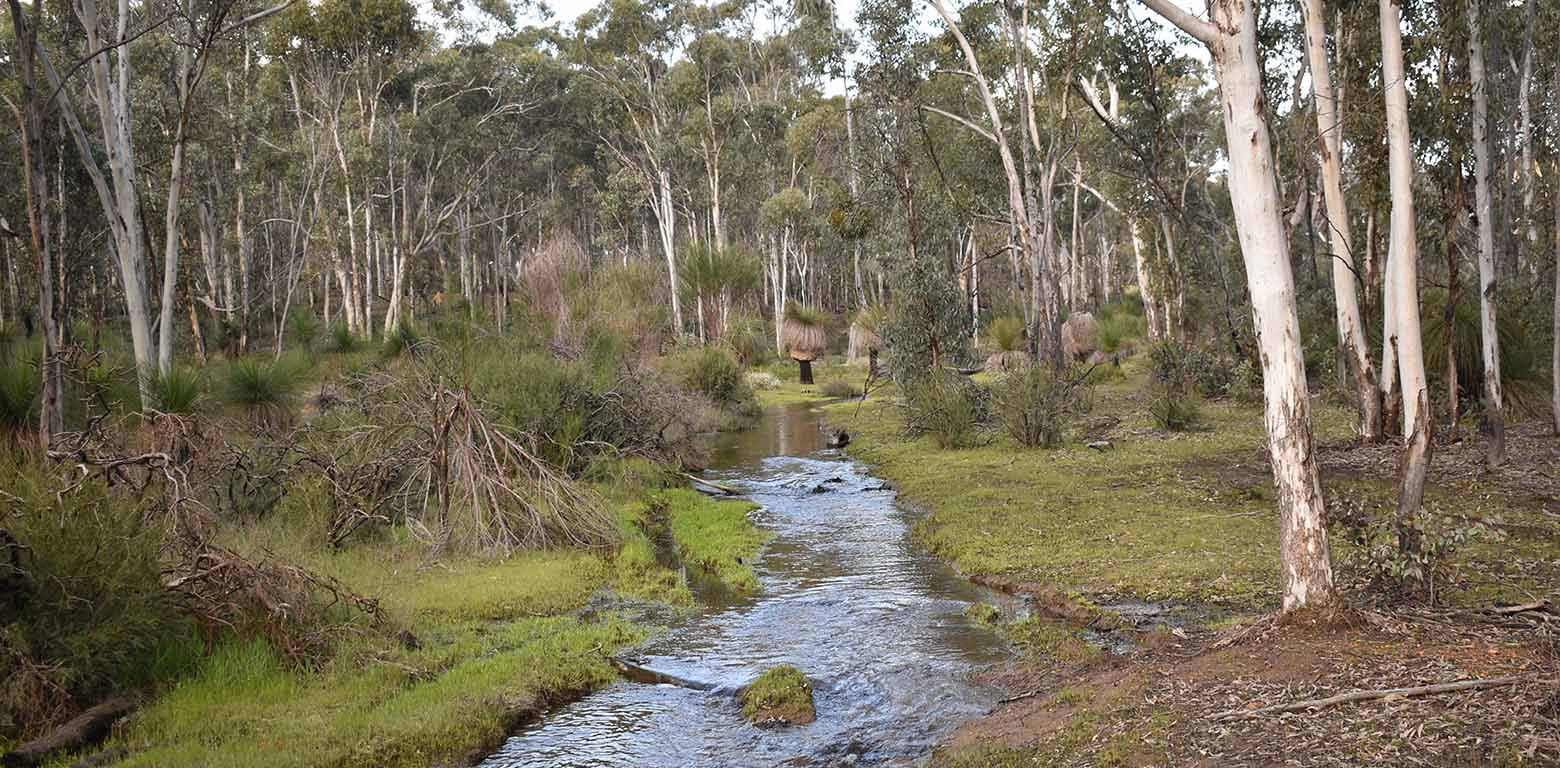
Julimar Brook, winding its way through the forest.
The Julimar Brook itself, which flows predominantly through forest and woodlands, has a catchment of just over 100 sq km, with 86 sq km of that within the Forest. Historically, it had water quality so high that it was once considered for a public water supply.
Despite this critical importance, the Julimar Brook catchment had been neglected when it came to active management and monitoring. We are pleased to report this has changed! Since September 2023, the Toodyay Friends of the River, in partnership with the Ellen-Brockman Integrated Catchment Group, has been actively monitoring the Brook and conducting regular water quality analysis.
The results are being loaded onto the Department of Water and Environmental Management’s (DWER) database, ensuring this vital waterway receives the attention and protection it deserves.