Written by Sharon Richards, JCAFA
Original Article: October 2025 edition of the Toodyay Herald.
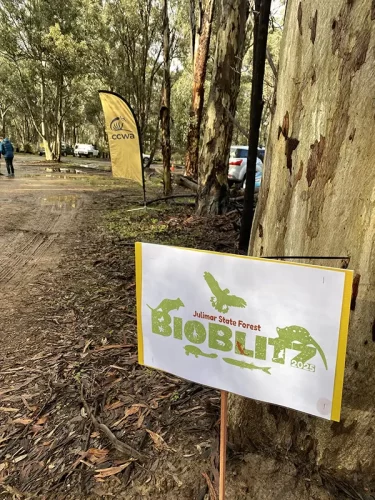
Julimar State Forest is an amazing place, full of hidden gems. With nearly 100 people searching, it’s much easier to find them, even on a wet and chilly weekend!
Our BiobBlitz weekend kicked off on Friday (September 5), with the Conservation Council of WA’s, Environment Matters, a fabulous evening of presentations by fascinating experts. A beautiful Welcome to Country by Uncle Ben and Robert Miles opened the event.
Jason Fowler, Senior Campaigner of the WA Forest Alliance, gave an overview of the Forest and the current threats it faces; Max Howard, of the Avon Valley Bird Group shared what birds we would be lucky enough to see; Daniel Heald captivated us with the world of invertebrates; Dr Kit Prendergast was passionate about our native bees; and Julianne Waldock fascinated us with trapdoor spiders.
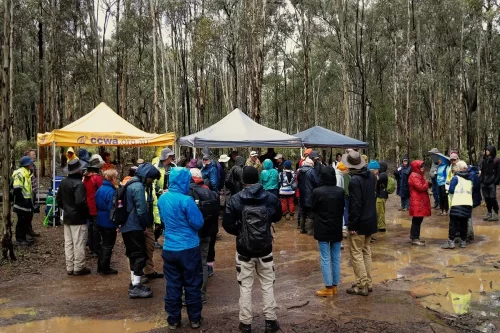
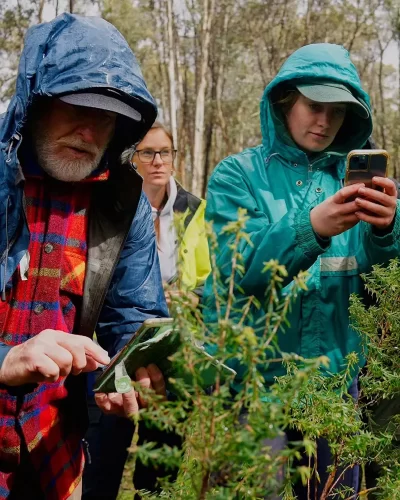
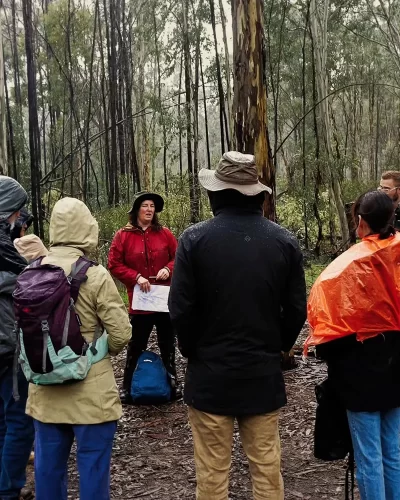
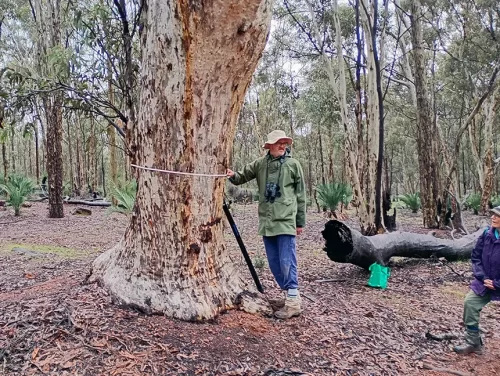
The BioBlitz on Saturday commenced on Country, with a smoking ceremony led by Robert and Uncle Ben, joined by Ballardong Elder Sharmaine Miles. It was then time for the survey teams to embark on their searches. Over 94 people set off looking for fungi, flora, birds, invertebrates, reptiles, trap-door spiders, tree hollows, and to study habitats that had previously been burnt.
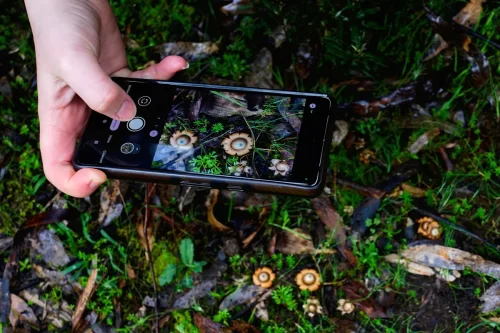
Everyone recorded species either on paper or using iNaturalist, an app that allows you to record and share observations of nature and get help with identification.


Even within 50 meters from basecamp, the plant life was incredibly diverse, with a vast array of beautiful orchids, including the delicate Blood Orchid. Further afield, a group discovered the endangered Many-headed Dryandra and the priority four Yellow China Orchid.
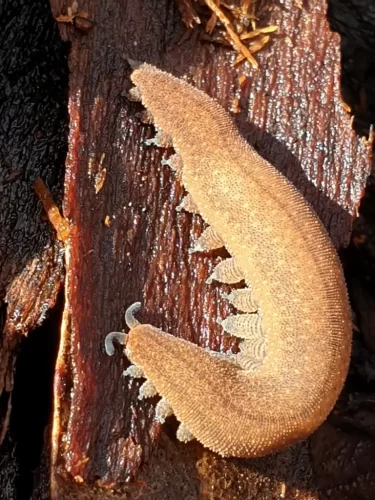
The invertebrate team also had an incredible find: not one, but two velvet worms! Invertebrate expert Daniel Heald had managed expectations by saying a find was unlikely, but they were there, just waiting to be seen.
An environmental management specialist, Mel Howe, took groups to study the forest’s recovery after prescribed burns. They sadly observed fallen trees and a lack of natural regrowth in the lower and middle storeys of the burnt areas. This absence of shrubs and bushes leaves small animals and birds vulnerable to predators and fewer foraging opportunities, a stark contrast to the unburned areas.
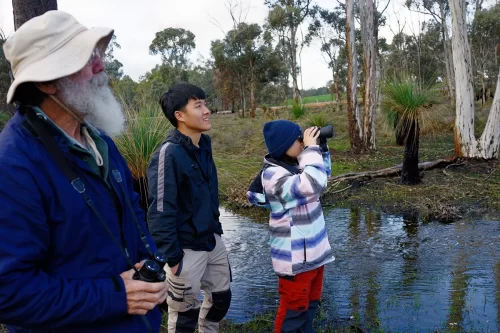
The bird group, led by Max Howard, had a successful outing, spotting key species like the Jacky Winter, Western Yellow Robin, and Rufous Treecreeper.
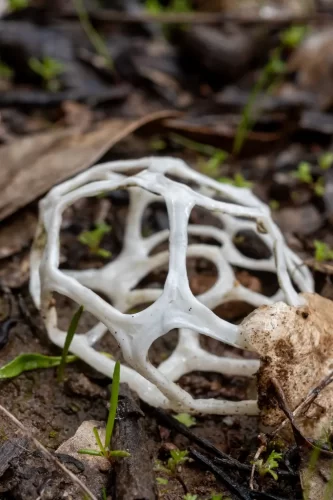
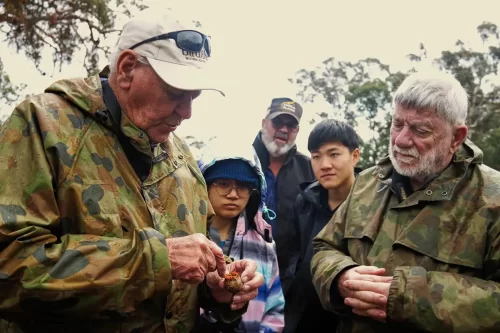
That evening, we took a different approach to finding wildlife. Daniel set up a moth trap, but the cold weather meant few moths appeared. Meanwhile, mammal expert Carly Moir led a group spotlighting. They were rewarded with an amazing number of possums and frogs, as well as a very special appearance from a critically endangered Woylie.
We also delved into the realms of bats with ecologist, Kelly Sheldrick, employing a wonderful gadget, a bat detector, which can detect ultrasonic noise. A slow walk in the dark revealed that bats were present, even if they weren’t seen at the time.
On Sunday morning, the survey groups moved to new locations, broadening our discoveries. Over the 2 days of surveys, we recorded over 360 different species, with that number expected to rise as more data is collated. A full report will be shared once all the information has been gathered and analysed.
A BioBlitz is a wonderful opportunity for citizen scientists—people like you and me—to join experts and contribute to vital data collection. We were fortunate to have incredible support from subject experts, university students, and local enthusiasts, with some people travelling from as far as Denmark and Walpole. Many visitors to the forest were there for the first time and left with a strong commitment to return.
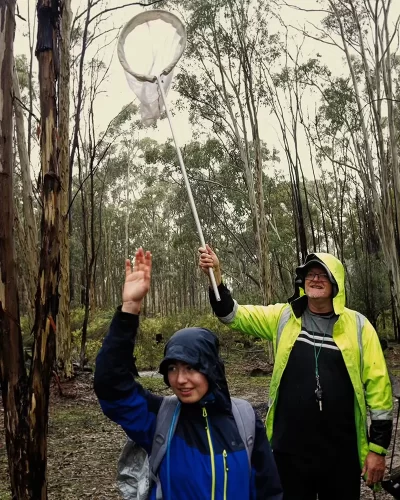
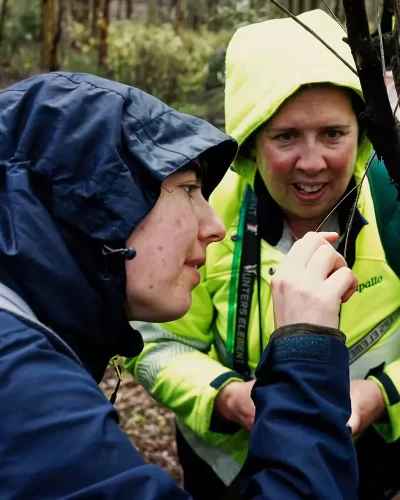
Organising the event took a huge amount of work, and it would not have been possible without the local knowledge of the Toodyay Environmental groups and the incredible effort of the Conservation Council of WA’s (CCWA) Kelly Sheldrick and her team. We also thank Jason Fowler from the WA Forest Alliance (WAFA) for suggesting the event and helping to make it happen.
We are incredibly grateful to Robert Miles and Senior Elder Uncle Ben Taylor, who provided a beautiful Welcome to Boodja and Smoking Ceremony. A special thank you also to Helen Shanks from Noongar Kaartdijin Aboriginal Corporation (NKAC), who helped with coordination, and to Amber from the Northam Environmental Hub and Joy, a CCWA intern, for setting up the iNaturalist project. Amber Bateup also took some of the amazing photos you see in the article, and more, for which we are very grateful.
The BioBlitz was also proudly supported by the Bupa Foundation.
The results will be released in early 2026.