Written by Sharon Richards, JCAFA
Original Article: May 2025 edition of the Toodyay Herald.
Julimar State Forest is subject to Department of Biodiversity, Conservation and Attractions (DBCA)prescribed burning. They have a policy of ensuring that at any particular time, 45 per cent of Western Australian government-owned land (forest and bushland) is less than 5 years old.
In April, the Toodyay Naturalists Club hosted a meeting via Zoom with Dr Philip Zylstr from Curtin University. Dr Zylstr came into bushfire research from a career in fire management and specialist remote area firefighting.
A pioneer of the modern role of Fire Behaviour Analyst, he developed the first software used to guide efforts to contain large fires using predictive behaviour.
Dr Zylstra explained how his research revealed that our current prescribed burning regime was based on science from 2009, which has since been refuted.
His research determined that it is the weather, wind, height and density of the understory (shorter bushes and shrubs like banksia) that drives the intensity and controllability of a bush fire. It is not the ground fuel load.
Consider then, if we keep burning that understorey every five years or so, it is in a permanent state of regrowth and providing more fuel, producing a more intense fire.
According to Dr Zylstra forest/bushland will reach a point where it will start to self-thin at around 25 years.
Referred to as ‘Ecological Control Theory’, the model asserts that the density of the tree canopy will reduce light levels, the fuel load of the understory will be reduced, and the forest will become less of a bushfire risk and easier to navigate for firefighters.
Prescribed burns in WA are often lit by incendiary devices thrown from a helicopter, not the most accurate approach. Apparently, it is cheaper than putting rangers on the ground to light the fire.
In recent years, there have been a number of prescribed burns that have devastated local wildlife in the South West of WA. A numbat colony was decimated in the Shire of Manjimup in 2021. In 2023, just north of Denmark in the Great Southern, endangered peat swamplands, which had recently been placed on the ecologically threatened communities list, were still smouldering weeks after a prescribed burn in the area.
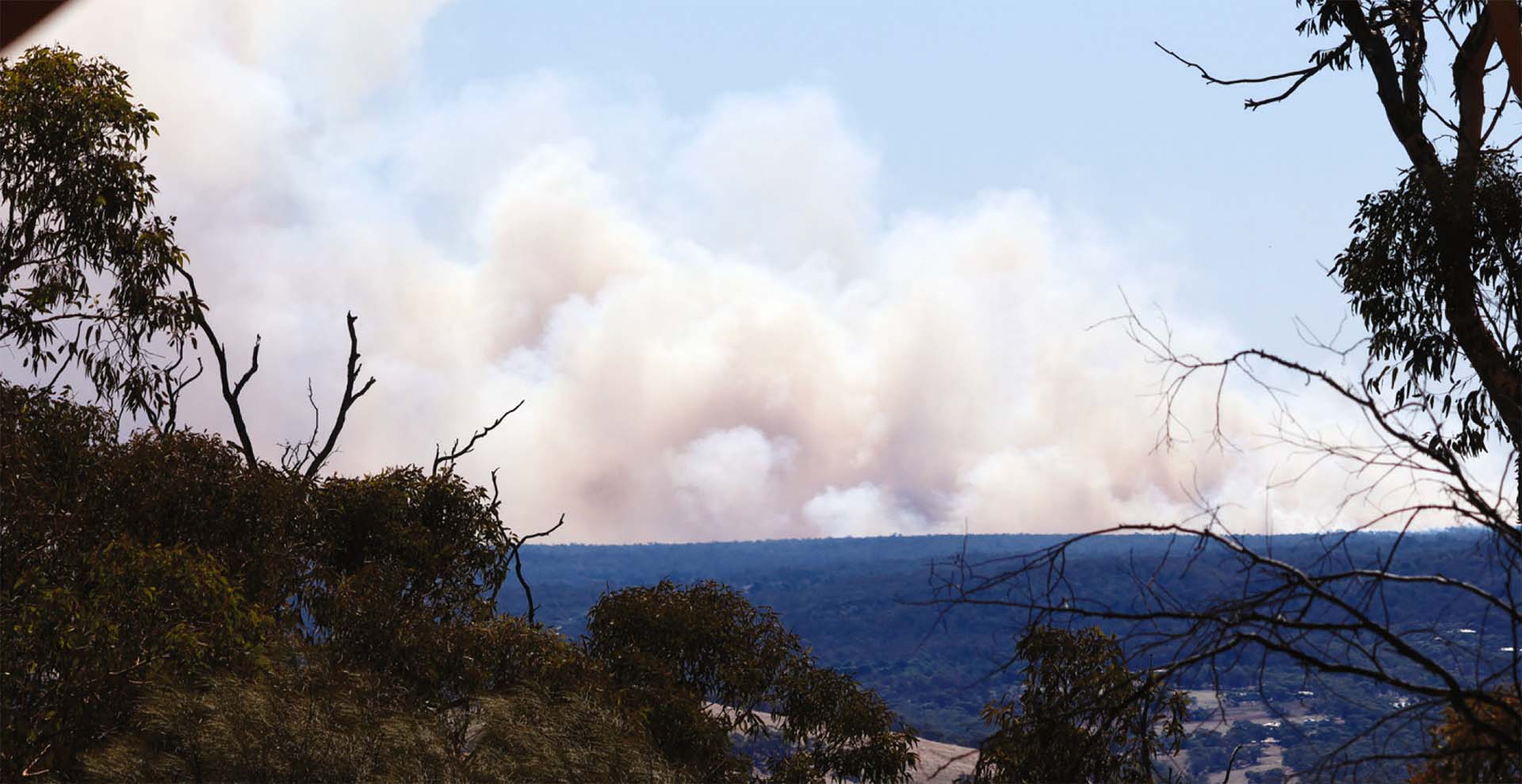
Smoke from a prescribed burn at Julimar State Forest
The ideal weather conditions for a prescribed burn are calm with no wind, meaning that the smoke lies around for days. The advice is to stay indoors if we have a respiratory or a chronic heart condition.
Studies have shown there are increased presentations to hospital Emergency Departments and even deaths attributed to the severe smoke haze produced. The effect of prescribed burning on human health is not often revealed.
Our brave and dedicated firefighters deserve more than to be put at risk when there could be a better way forward.
Indigenous Australians have practised cultural burning for thousands of years, using fire as a tool for land management. Sometimes, small fires are set to reduce fuel load. This is known as cool burning. Why have we moved away from this?
Bushfires and controlled burning are an emotive topic. Often, what the community experiences is the graphic and devastating vision on the news of a fire razing an area, wildlife burning to death and serious threats to lives and homes.
Much research has been undertaken since 2009 on what good bushfire management could look like. Early detection rather than the reactive practice we currently have would seem a logical step, and there is a wealth of research currently being undertaken in this area.
Following Dr Zylstra’s research, we should be using “good science” for better outcomes.
What you can do
- Write to DBCA highlighting your concerns:
- Director General, Stuart.smith@dbca.wa.gov.au
- Perth Hills District, Parks & Wildlife Service, mundaring@dbca.wa.gov.au.
- www.dbca.wa.gov.au/contact-us
- Write to local MPs & politicians: